Friday, March 8, 2013

Myanmar Studies... Burma bound...

Hey Friends,

It's been awhile since entering the Blog-o-sphere, so I am preparing for another adventure.

I have begun the first year of a three year program, studying for a Doctor of Ministry degree at Central Baptist Theological Seminary in Shawnee Mission, Kansas. This Semester our classes will be conducted at MIT...  That is Myanmar Institute of Theology in Yangon, Myanmar, formerly known as Rangoon, Burma. Myanmar is a developing nation, that is slowly experimenting with democracy. 

For the last 20 years they have been ruled by a very firm military dictatorship or Junta. A major voice for free and democratic governance has been Aung San Suu Kyi, A nobel Peace prize Laureate, who endured over 20 years of house arrest in Yangon. The country is 90% Buddhist, and 2013 is the 200th anniversary of the arrival of missionary pioneer, Adoniram Judson in Burma. We will do some traveling and we will spend a week in class with Burmese pastors who are also studying for their DMin degree.

Add cKaption
Our trip runs from March 12 through March 23rd.  I will try to post occasionally while we are in the country.

Thanks for your prayers, support and for following along. I'll try to keep it interesting
Shwedagon Paya or Pagoda in Yangon

Monday, February 21, 2011

This is How we Live...
Notes from Embarcadero, Honduras

On January 4th, 2011, eleven Jewell students and faculty traveled to Embarcadero, Honduras, to continue our ongoing work with our Village Partners Project. We stayed in the village for six days, living, working, and learning alongside our partners. The following are some excerpts from journals and reflections from our trip.

At first light, long after the roosters alerted us to the approaching day, we pulled on our rubber boots and headed out into the fields. Our guide this morning is Maximo, a leader in the community, whose weathered face smiles as he offers us a glass of fresh milk. This is as fresh as it gets. His son,

As we look at Maximo’s small garden, someone asked if they ate the things they grow, or if they sold them. His answer surprised all of us… He pointed to the garden and said, “This is how we eat…” and he turned and waved toward the palm trees and said, “This is how we live.” He was basically telling us that the small gardens help keep food on their tables from day to day, and that the harvest from the palm trees essentially pays their mortgage, or allows them to live on this piece of property. In Honduran terms the members of this small agricultural co-op are referred to as “Campesinos” which translated means “peasants” or “country folk.” As we continue to work with our partners in Embarcadero, we hope to help them achieve their goal of one day owning the land that they live and work on.Rudy, just took a break from milking the cow to fill a cup for us.

Our friends in Embarcadero live together as an agricultural co-op, and Maximo has brought us out

this morning, to show us some of the ways they live in harmony with this fertile land. The cattle, that are milked and used for beef, are just one example of ways our friends find sources of income and sustenance in the village.

As the sun peaks over the mountains, we leave the milking pens and put our rubber boots to good use as we trudge through the water-soaked mud trails, between the 5 year-old palm trees. A five year-old palm tree is really more like a palm “bush,” with the upper palm fronds reaching heights of about 12 to 15 feet. The men of the community also work this 100 acre field of palm trees, and when we asked how they divided up the field, Maximo explained that they don’t divide the field, they all work together to keep the trees healthy and productive. Later we watched as they harvested the palm seed bunches.

During our trips we sleep in a one-room school building, and each individual is “adopted” by one of the families. During the week they share breakfast and dinner with their host family. Maura McDowell, a junior, education major, share

d how valuable this relatio

nship building is for the project. “One evening I watched as my family spent time just worshiping and singing and it was so cool. They were just singing as loud as they could and playing their instruments as loud as they could. It was really cool because my “mom” was kind of humming along to it while she was cooking dinner. Spending time with them in their home and learning from my family helped me see and understand how they actually live, and it really blew my mind.” Junior, Ashely Willard adds, “Being in this small community that was self-governed and seeing how they worked together with a genuine simplicity of life was an amazing concept. Living in a real community without any technology and being able to communicate with our hosts, even not knowing the language, was absolutely life changing.”

The high point of our week in the village was the celebration we held on Sunday, celebrating the completion of all of the composting latrines in the village.

(Note: Sanitario Secos are an above ground, dry composting latrine contribute to the goal of cleaner wells in the village. These are an important alternative to the commonly used “Pit Latrines” that contaminate the high water table in the region.)

The celebration was a big event, starting the day before, when the men of the village chose one of their cattle to serve as the main course for the celebration. They constructed a large covered area and brought in a large grill and a huge bag of charcoal. They also invited government officials to be a part of the festivities. Among them were the Mayor of nearby Esparta, and the Director of the Ministry of Health. Professor Rafael Carias also brought two Nursing professors from the University in nearby La Ceiba (UNAH-CURLA), so that t

hey could see the “Sanitario Secos.” The nursing department from UNAH-CURLA plans to help us track health issues in the village in future months to determine if these recent village efforts actually improve their overall health and wellbeing.

We started in the school house where we heard speeches from all of the gathered dignitaries, congratulating the community and emphasizing the value of these new sanitation units. More than once it was noted that this village is truly modeling appropriate waste management that could be used in other villages throughout rural regions in Honduras, keeping ground water cleaner and serving as a source for fertilizer in the fields. Following the speeches we enjoyed entertainment provided by a group of Honduran dancers dressed in traditional garb. The dancers then invited the leader of the village to join them in dancing. It wasn’t long before many in our group of “gringos locos” joined our friend Adriano, dancing to celebrate the village’s accomplishments. As the dancing subsided and they began to pass out plates of “barbacoa” barbecued beef, rice and beans. A great meal, washed down with liters of Coke, Fanta, and Tropical, the latter being an interesting banana flavored soft drink.

Following the meal there was more dancing, including some limbo and a lot of Spanish/English conversation. We truly experienced this village’s excitement and appreciation for the projects we have partnered on thus far. Senior communication major, Paul Moore writes, “It was so rewarding to know that we had a small part in helping with this project, we sponsored and helped build these sanitarios, but we also had a part in teaching them how to build, maintain, and use the sanitarios effectively so that they could teach neighboring villages about the how it could benefit their communities.”

Looking toward future trips we did a number of things that will help us prepare for further improvements in the village. As one new dimension for our project this trip, students from UNAH-CURLA University joined us during our stay in the village. We teamed together to measure and test wells, and talk with families about their stoves, and update our census information. Currently many homes use a wood burning stove inside the house, which fills the home with smoke. We spoke with all of the residents and discovered that they are all interested in buying and building a more efficient stove that vents outside their house. Our partners from the University in La Ceiba, will be organizing a workshop to teach the village women how to install and test a new stove in

one of the family houses. When we return in May, we will join the women in constructing a new stove in each house in the village.

The people of Embarcadero are also in the process of forming a “Health Committee,” that will ensure the proper use of the “sanitario secos” in the village and monitor the health of each family. They will also work with the Nursing Department from the UNAH_CURLA to lead healthy lifestyle seminars dealing with a wide range of issues including, hygiene, newborn care, women’s issues, and dietary information.

It was hard to leave on our last day, Jessicca Baker sums it up this way, “Everything about the trip was an amazing experience, I am still working on putting everything together, but I know that I have changed as a person and that my focus has changed. The trip really opened up my heart and I am so thankful I got the opportunity to go.”

On each visit we learn more about how we should live from our partners in Embarcadero. In February we will take a small team of business students to the village to sit down with the leaders and develop some financial strategies to help them be more productive. And in May, just after graduation, we will take our next full team to continue working with, and learning from our Honduran partners. If you would like more information about upcoming trips contact Dr. Lori Wetmore or Jeff Buscher for details.

Sunday, January 2, 2011

Headed back to Honduras

Hey Friends,

On the 3rd of January I'll celebrate a birthday, and on the 4th I head to Honduras with 10 others from Jewell.

We will spend 10 days in Honduras. most of that time we will be in the village of Embarcadero with our friends.
Hopefully they have completed all the latrines and we will work on another set of projects while we are there.
On this trip we will get to know some students from the University in La Ceiba. (UNAH-CURLA)
They have been working with the folks in the village on community development issues and community leadership.

More after the trip - Happy New Year - Jeff

Monday, November 22, 2010

Spring Break Last Year


We had a great trip during Spring Break last March. Late luggage and heavy rains cut our stay in the village a little short. But while we were there we held some English classes, met with the Mayor of Esparta, and had some great conversations with the people of Embarcadero about future projects. Dr. Bunton did some water testing of the wells in the village. Latrine work continued, and we learned about a possible Chicken raising venture for the women in the village. While visiting with the Mayor we asked about the future possibility of a bridge over the river so that Embarcadero residents will have access despite the rains. We also visited the Campus of UNAH-CURLA University in La Ceiba, and began to visit about internships for students at the University as they work with our partners in Embarcadero.

Saturday, February 20, 2010

Jewell's Village Partners Project

January 2010 Embarcadero, Honduras

This past January, boarding a plane to the Central American country of Honduras was just a little too easy, as the snow continued to pile up and temperatures plummeted in the Midwest. Little did we know that even in the warmer climate, precipitation would still affect our adventures in the village of Embarcadero.

Leaving the airport in San Pedro Sula, it was cloudy but no rain was falling. Our local host, Tim McNeely, informed us that it had been raining in the village for four days, and that our chances of getting into town were virtually impossible. That night we slept in the chapel at the orphanage, but as we rested, a steady tropical downpour kept us just a little restless, knowing that our only way into the village is by driving through a small river, that continued to swell with each passing day of rainfall. The next morning, we decided to go and see for ourselves how it looked in Embarcadero.

The drive to Embarcadero usually takes about an hour, but four days of rain changes the landscape in many ways. We drove past small mudslides, pastures that had been transformed into lakes, and the road itself, in many places, resembled more of a river, than a road. When we arrived at our river crossing we learned at its deepest point the crossing was over 5 feet deep. Maximo, one of the leaders from the community road his bike out to meet us, but he was only able to do so because he knew from memory exactly where the submerged footbridge was

under the surface of the flooded stream. We learned that this stream rises quickly, but also recedes quickly, so if the forecast for dry weather held, we would be able to get into the village the next day.

The rain stopped and the next day we drove to the river, parked our van, and walked the final mile into the village. Thankfully we had also rented a small four-wheel drive pick up that could negotiate crossing the river. Students trudged the muddy road and finally entered the village of Embarcadero. Junior, Religion major, Abby Pratt describes it like this, “As we walked into the village I remember thinking, ‘what am I getting myself into here? This is for real!’ But when we left, three days later, Icouldn’t help but realize how silly I was and how much I had changed in those three days.”

Our trip had two goals, to start a composting latrine for each family, and to begin building relationships with the members of the community. Materials for building the latrines had been delivered prior to the rains, so once we got into town we were ready to get to work. The first order of business was to gather the folks of

Embarcadero at the schoolhouse and introduce students to their adopted families for the week. Our group slept at the schoolhouse, and shared meals with our adopted families. This proved to be a little uncomfortable at first, b

ut by the week’s end, everyone felt like they were truly a part of their respective families. Our Spanish skills ranged from

none to fluent, so it took a lot of creativity and determination on the part of our students to hold basic conversations with our hosts.

Before nightfall, which means a lot more when you have no electricity, we had started to dig the holes for the foundations of the first two latrines. The work continued the next day as we formed teams with very specific duties. First there was the location team, led by one of the local men named Infriene. He new the exact dimensions and had a system using stakes and fishing line to mark where each latrine foundation should be placed based on his discussion with each resident. Laura Vanbiber, a senior, got to work on Infriene’s team, and she said this about the experience, “ When I approached the group several of the men just looked at me and then went back to what they were doing. I felt like the new kid at school, waiting to see if I would fit in. Then I asked Infriene if he needed my help and he said, “Of course! You are my partner.” That is when I really felt like I was part of the group. After that day, the other men in the town began to treat me like I was just one of the guys. When we were waiting to measure the next foundation, they would ask me questions about my life back in America or we would talk about how to say the names of the tools in English. It felt really good to know that I was able to accomplish these things on my own.”

Our student’s formed most of the next two teams. The rough dig team, and the finish dig team. The rough dig team used shovels to dig about a six inch wide trench just inside the fishing lines left by the placement team. Once they finished a rough outline, they would move on to the next site, while the finish dig team would use hand trowels to clean out the trenches and make sure they were level and square. This prepared the way for the final team, usually consisting of the homeowner and a few of his neighbors. These men worked together to actually lay the cement (mezcla) and place the first course of bricks in the holes. It worked out to be a great system, in two and a half days we were able to start 17 latrines, one for each family in the village.

After lunch each day, instead taking a little siesta, we always found something interesting to do. One day we walked through the palm groves to see how the men of the community work together to care for and harvest the palm nuts from the palm trees. The trees are only about six years old, and so they are only about 6-8 feet tall right now, looking more like palm bushes, than palm trees. The next afternoon, we made our way to the soccer field at the edge of the vill

age, even though it was very muddy, and half of it was still under water, that did not stop some of the guys from a rousing game of “futbol!” Josh Ehrhard, a Jewell soccer player said, ““Who would have thought that a remote village would be able to teach us so much about our culture, relationships, family and stuff.” While the guys played soccer the girls played games with the children. Many of us watched and cheered as players slid through the mud.

Sunday was supposed to be the next to last day in the village, and so we worked together with the residents to share together in a worship service at 1pm. Unfortunately, the night before it had started raining again, causing us concern about being able to get out of the village, in the event the river rose again to an impassable level. We moved up our worship service and quickly dis-assembled our makeshift camp inside the school house. In less than 30 minutes we had all of our belongings stowed in the pick up truck, and drove it out to the river where the water was indeed getting deeper by the minute. As I drove through the river the water was easily four feet deep, leaving the footbridge just a foot above the water level. We parked the truck in a nearby family member’s yard, and Colon and I walked back to join the worship service just beginning.

The service was enthusiastic, and filled with music, scripture readings and of course some energetic Pentecostal preaching. The first speaker was our liaison, Tim McNeely, then from the local pastor, Maximo. Following the service we took about an hour to share formal words of appreciation and thanks from both our students and the men and women of the village. Each student presented their host family with a framed picture of the student with their family. We also gave the children soccer balls, donated by Jewell’s soccer team.

One by one the people of the village stood to express how much it has meant to them for us to come and live in their village. In some cases they addressed their adopted student directly, sharing how much they valued their new friendship, bringing tears to many students eyes. Abby Blevins said, “Each day, eating meals with Maximo and his wife Emelda was an interesting experience. I always invited Emelda to join us, but in their culture, she is accustomed to staying in the kitchen, while the family eats, but I made a point to invite her at each meal. I wanted her to know that I wanted to spend time with her too. At the closing service, when Emelda said that I was like a daughter to her – I totally lost it, I gave her a big hug and I started crying like a baby!”

Our group said our last goodbyes and left the village the same way we came in… on foot, wearing rubber boots, carrying our backpacks, sporting just a few more blisters and bug bites. As we walked the muddy road toward the river, we all knew that we would never be the same. Our partners in Embarcadero were now our family and the memories of being truly immersed into their world will help us make our world at Jewell a better place. We are all looking forward to our next trip in March, and how the Village Partners Project will continue to benefit both communities.

Thursday, January 7, 2010

First Day in Honduras

We arrived in Honduras on Tuesday, during the third day of torrential downpours. On Wednesday we ventured out to Embarcadero, but the recent rains made it impossible for us to cross the swollen stream at the entrance to the village. We are "Camping out" in the chapel at the Proyecto Alcance Orphanage, which is run by our friends David & Dialis Romero. We will do some work for them at their school tomorrow while we wait for the rainwaters to recede. It quit raining tonight at about 8pm (We are on Central time too) So hopefully we can get into the village late tomorrow or Friday. We are all well and soaking in the Honduran culture. We will send another update when we can. We appreciate your prayers and support as continue our adventures.

Thursday Morning...
No Rain Last night - there was a power outage and saw amazing display of stars and shooting stars in the total blackout. This morning it is sunny and we will try to get to the village today. We are breaking our "Camp" in the chapel and preparing for travel. The forecast shows no rain until Saturday. We pray that the weather holds. Blessings - Jeff

Monday, January 4, 2010

Half-Way There...


What can we say... It was pretty easy to board the plane this afternoon, considering the local temperature was hovering around zero. Our friends at Continental threw us a curve ball this trip. Usually we leave early in the morning and make a quick connection in Houston and we are in San Pedro Sula Honduras by Noon the same day. This year we were notified about two months ago - that the early morning flight had been moved ten minutes ahead. That move eliminated the option of a short layover in Houston. The minimum time allowed is 30 minutes, and the adjustment left us only 20 minutes. So tonight we are sleeping at a hotel near the Houston Airport.

We have made the most of our time. After dinner we spent about an hour getting acquainted, sharing stories about our families and our holidays. We also talked a little bit about our fears and expectations as we head into this trip. Some in our group are a little anxious about not having much privacy this coming week. (We are all sleeping in a one room school house.) For the most part everyone is excited about building relationships with the families in Embarcadero.

I may not have a lot of internet access the next few days since we will be working in the village. If you try to locate Embarcadero on a map of Honduras, you probably will not find it. But in the northern district of Atlantida you will see two coastal cities - Tela and La Cieba. A little closer to Tela is the village of Esparta just a little inland. Embarcadero is just a mile east of Esparta. This little agricultural community is at the end of the road... literally. Until our next update - stay warm!

Pictured: From a previous trip - The sign on the church in Embarcadero.

Our team consists of...
Jeff Buscher
Dr. Lori Wetmore
Tim Honse
Josh Ehrhard
Matt Goldschmidt
Abby Pratt
Abby Blevins
Caty Compton
Kait Bartoletta
Laura Vanbiber
Amber Hull
Ken & Janessa Carroll

Tuesday, December 1, 2009

New Adventures in Honduras


On January 4th 2010, a team of 13 students, faculty and staff, will head to Embarcadero, Honduras for our third trip in an ongoing partnership with this village. During our week in the village we will build relationships with our host families, and we will build as many Latrines as possible.


Communities engaging for the purpose of healthy change through learning, practicing, and partnering.

This project falls under the mission of Jewell’s Center for Justice and Sustainability. Our goals are to act thoughtfully and responsibly as we address societal, economic, and ecological challenges as we encounter them. Through this project we have broadened and re-defined what it means to “Serve Abroad.”

Students step outside of their own cultural experience, and engage in community led projects designed to meet specific needs for the Honduran village. Students and faculty will dialogue and reflect, enhancing the students’ academic and practical grasp of the challenges faced by developing communities. This project is becoming a model for campus-wide initiatives engaging global cultures.

Immersed in Rural Honduras

This year we will take two trips to Honduras. The first will be in January and the second during Spring Break. Participants will stay in the small village of Embarcadero, Honduras. Lodging will be in the school house, and each student will be adopted by a family in the village. We will share meals together and learn from our hosts.

As a community the residents have set priorities to improve the health and well being of their village. The first issues to be addressed include improving the water supply (wells) and providing healthy, sustainable waste systems.

To those ends, this year’s effort will be to work alongside the residents to build a latrine for each family in the village (19 families). Last year’s group did education work and completed the first two latrines. Since that visit a third latrine has been completed.


Friday, July 31, 2009


Matthew 25 Project: Lending a hand, where a hand is needed most...

In Kansas City’s urban core, one zip code was dubbed “The Murder Factory” in a January 2009 series of articles in the Kansas City Star. 

Author Tony Rizzo writes, “No other ZIP code in Kansas City, St. Louis or any other part of the state comes close. Though its 26,000 residents make up about 6 percent of the cities population, it accounts for 

20 percent of Kansas Citians in prison for murder or voluntary manslaughter.” In the midst of this neighborhood, WIlliam Jewell College has forged a strong partnership with the staff and volunteers at the Palestine Neighborhood Development Center. Among many of the good things they do for their neighbors, once a year they partner with Jewell, selecting homes to be painted during the Matthew 25 Project.

A qualifying home owner receives paint donated through the Kansas City Paint Program and Jewell provides the volunteers by inviting churches, schools, and other civic groups from all across the metro area. Volunteer groups sign up to serve for one day during the week. This year because of the extreme heat, crews started pretty early, around 7:00 am, and worked until noon or 1:00pm. In four days, 17 crews completed four homes, and by Friday, as we were gathering equipment and cleaning up supplies, homeowners were ecstatic about the facelift their homes received.

 During the course of the week one volunteer, who had been pondering the plight of the neighborhood, was thinking out loud and asked me, “Do you really think that painting this house will make a difference?” We visited for a few minutes and determined that each resident will definitely benefit from having a newly painted home. The next day his question was answered very clearly when DeWayne Bright, Coordinator of the L.I.N.C. Program at the Center, relayed the following story.

One of the residents of a street where we were painting 2 homes, told DeWayne how much she appreciated the work that was being done. She shared how a year ago, family members on that same block had been arguing and fighting with one another and the situation had escalated to some minor violence involving calls to the authorities. She told DeWayne that over the course of the week those same quarreling family members determined to work together to do some yard work and made plans to make some long past due minor maintenance projects on their own homes.

Each day new groups would arrive at the homes ready to get as much done as they could before the scorching heat sent their weary, sweaty bodies home at mid-day. Equipped with paintbrushes, scrapers, ladders and water bottles they worked in the morning sun and whatever shade they could find to beautify the resident’s home. In many instances they also made some minor repairs and yard work to help spruce up the finished product. One homeowner complimented a group, telling them they were “Angels” because of the work they had done.

One of the key partners in this effort is Major Gene Bresino and his summer ROTC Cadet program of Central High School. This summer Gene is coordinating five crews of 10-12 students each. His teams and their sponsors will work most of the summer painting other homes that qualified for the program. Each week they also spend a day in class learning about character development and receiving leadership training. Many of the Cadets live nearby and know the residents whose homes they are painting.

The Matthew 25 Project is working to make a difference in “The Murder Factory.” With more partners in this grassroots effort we hope that the biblical mandate of serving others, found in Matthew 25 can become a reality in the heart of Kansas City.  Find out more how to get involved at: www.matt25project.com

BEFORE & AFTER shots of one of the houses...

Wednesday, June 3, 2009

Meeting in Embarcadero

We arrived on Saturday in Embarcadero at about 11 am. We drove two vehicles, a Hyundai Santa Fe and a Toyota four wheel drive pick up. When we got to the river, it was not much more than a mud puddle, but the folks in the Toyota convinced us to leave the rental car behind and climb into the pick up to cross the muddy depression. During the rainy season (December & January) the water flows nearly as deep as the wooden footbridge on the left. Access by vehicles is often limited to the village because of this unpredictable drainage. 

Once we crossed the mud puddle and made our way into the village we were greeted with smiles and hugs, mostly from women and children because we learned the men were in a Co-Op meeting in the school house. We were able to walk around and visit and get a look at the latrines our team built in January. The folks of Embarcadero had built a third latrine near the church. I put a 
picture of one of the latrines on my last post. We were very encouraged by the way the community has embraced the value of the ecological, composting latrines. They prevent pollution of their water source and provide fertilizer for their crops. 

A little later in the afternoon we were able to hold a meeting with the
 
folks of the community in the school house pictured here. Our
discussion covered three primary topics. First we wanted their feedback on the latrines and we wanted to hear what they felt would be best for their community.
Men and women from the community expressed their appreciation for the latrines and also related that because
 of the education offered last Januray's visit, they no
 longer wanted to use the "Pit Latrines" because they understood that those would contaminate their wells. They are eager to enter into a partnership that will provide a "Composting Latrine" for each family in the village. When you include the church and the school, this will require the building of approximately 25 more latrines.

The second topic we discussed was the logistics of our on-going partnership between William Jewell College and the village of Embarcadero. Our goal in this partnership is best expressed through the phrase: 

"Communities engaging for the purpose of healthy change through partnering, learning and practicing."  

As we discussed ideas for our next trip to Embarcadero we arrived at the following model. A group of no more than 15 will travel to the village in January of 2010. They will sleep in the school building and each participant will be "adopted" by a different family for meal times eating what the family eats, when the family eats. Our group will cover the expenses of the extra meals and lodging in the school building. This plan helps meet our goals a number of different ways. Students will truly be immersed in the local culture, also we will be very close to our work sites as we build more latrines. Also because we will be right there with them we will have so many more opportunities to get to know them and learn from them. Building these relationships will be a great benefit to both of our communities.

Finally we discussed the best way to move forward in our plan to construct latrines and engage the folks of Embarcadero in the process. We talked about the need for resources to build the latrines. Materials for each one costs about $300 USD, which translates to just over 5,600 Lempiras. The average annual income for an agricultural worker in Honduras is only $450 per year or 8,500 Lempiras. They are committed to providing labor, along with our teams. We are also negotiating how housing our students can also be seen as an investment in the project. Each family will also plan and prepare the ground for the site of their family's latrine. 

In the coming months we will be raising funds for this project, but in our discussion with our partners we both agreed that we want both groups to contribute equally to the project. It is important that we continue to support and encourage their community as they strive for healthy change. 


Tim McNeely is serving at Proyecto Alcance in La Masica and teaching school in San Juan Pueblo. He is works with David and Dialis Romero, who have been our partners for the past 5 years. Tim will continue to visit Embarcadero every 3-4 weeks and keep our communication current as we move forward in our planning. Tim will be instrumental in getting supplies and building materials to our partners as we move ahead on this exciting project.

More next time about the great potential this project holds for participants from William Jewell.   Mucho Gusto - Jeff

Sunday, May 31, 2009

Village Partners in Honduras


FRIDAY

Our day started at 4 am traveling to KCI where we would board a 6am flight to Houston, and on to San Pedro Sula Honduras by 11 am local time (Noon CST)  Our driver, WJC Chaplain, Dr. Andy Pratt, braved the early morning hours to take Campus Minister, Jeff Buscher, Chemistry Professor, Dr. Lori Wetmore, and Alumni Mark Buhlig to the Continental gate and send us on our way. 

( Photo - Latrines built by our group in January )

Our flights were both early, in fact the pilot on one flight joked, “So the next time you are delayed you owe us 20 minutes before you can start complaining!”  Upon arrival something totally unexpected occurred – 2 out 3 bags arrived – somehow mine did not make it.  They knew it was missing before we got to the counter. Mmm?  Anyway we submitted a claim and they indicated it would be delivered to our hotel the next day?  We’ll see how that goes.  I was truly surprised because over the last 5 years we have never lost a bag on this leg of the trip.  As I write this I realize that our video camera and my medicine is in that bag… I’m sure it will arrive tomorrow… Now that I'm posting this note - Everything arrived just fine. In fact the good folks of Continental delivered my bag to our hotel in La Masica - Three hours away from the airport. Thank goodness, another day in those clothes would have been challenging.

Renting a car was an adventure: Avis said their car was not working, so she took it on herself to send us next door to “Econo-Car” Where they rented us a Hyundai Santa Fe for the same price we were quoted by our friends at AVIS. We signed some papers and we were pleasantly surprised with a shiny new Hyundai. It had a few dings and scratches, but it will be ideal for touring this part of northern Honduras. The important thing is that the AC worked just fine. We then exchanged our cash and made our way to La Masica.

Following Thursday’s earthquake the drive was not too bad. There were back ups at the Bridges. The bridge near El Progresso was the worst damage we saw.  As we approached the bridge there were some cracks in the highway. We crossed on the good bridge and made our way toward San Juan Pueblo where we would stop in and pay a visit in the colonia where we have built homes and a church over the last 5 years.  It was great to see the families that we have worked with over the years, including the high school student – Rosita, who our CSM group sponsors by sending funds for her school supplies each year.

From there we drove another 15 minutes into La Masica where our base of operations… Hotel Media Luna  (Half Moon Hotel) stood waiting for our arrival.  After a few minutes of tracking folks down at Senior Antunez Hardware Store, we finally found a fellow that could hook us up with keys for the rooms.  And we got settled in for the night.  I have to stay up and wait for Donette, Tono, and Dani to arrive from Guatemala. They finally arrived around midnight. 

Some of the things we will work through on this trip:  How do we appropriately assure that our partnership with the village folk of Embarcadero is intentionally reciprocal and can we ask our partners to be vulnerable with us by telling us their story. And then how do we communicate the big picture of our Village Partners Project?  I look forward to re-connecting with the folks in Embarcadero tomorrow – For now I think our friends have arrived, I’ve got to give them their room keys. 

More Manyana - Jeff


Thursday, May 28, 2009

EarthQuake in Honduras

Hey Friends,

All reports indicate there was scattered damage from this morning's earthquake. The village of Embarcadero is about 10 miles from the north coast of Honduras, and about 60 miles west of La Ceiba. I'm sure they felt the quake, hopefully their homes are still standing. We leave in the morning (5/29/09) and will return on Tuesday June 2nd. We understand some bridges were damaged, but it appears we can still get to La Masica before nightfall.  I will be blogging while we are there if possible, a primary internet line was severed, so I'll do the best I can to keep folks posted on the progress of our visit. 

Here is a link to the BBC story about the quake: 

 http://news.bbc.co.uk/2/hi/americas/8071568.stm

Serving Others...  Jeff

Wednesday, May 20, 2009

Headed to Honduras


Greetings Friends,

It's been awhile since our last adventure. We have wrapped up another great school year, and in just a few days a small group from Jewell will be traveling to Honduras to do some logistical work with our village partners near Esparta. The village is called Embarcadero and last January a team from Jewell partnered with some folks from Guatemala to introduce and build 2 composting latrines. We are going to see if they completed the third latrine and visit with them about the future of our partnership.  Pictured here is one of the homes in Embarcadero. Our plan for our next trip is to stay in the village 24/7 with our partners. Possibly camping out in the school building. With no electricity and no clean water, we will be doing some extensive planning to assure a safe and productive time while we are there next January.  Our upcoming trip will be from May 29 - June 2.  I look forward to sharing more about the trip soon.  Olah,  Jeff

Thursday, March 5, 2009

The Matthew 25 Project

We are very excited about this year's Matthew 25 Project
Our goal is to recruit approximately 45  Kansas City area churches to assemble crews of about 10 folks and work on a house painting project for one day during the Matthew 25 Project.

Dates: Monday - Thursday,   June 22-25
(We will use Friday as a make up day in case we get rained out during the week)

More information at the Website: www.matt25project.com  

As churches register for the project they will be assigned to a specific house and work day and they will also be paired with another church from the Kansas City area. Monday through Thursday each of the six homes we will be painting, will have two teams working together for the day. 

Visit the website and/or contact Jeff Buscher  (816-415-7560) at William
Jewell College for more information.   Last year was our first y
ear for this project and we were structured more as a
 residential camp/missions experience with stud
ent groups staying at the college. (See article posted on a nearby blog)   Th
is year we are inviting local churches to get involved 
and serve locally and build relationships with churches from all across the metro area. 


Thursday, January 29, 2009

Visiting Student Homes


In the middle of our time in Kenya, all of us had the very distinct privilege of spending a night with the families of our host students from Daystar University. Now that we are back in the states, and students are back into the routine of classes, I'm going to share about my experiences that weekend, and invite our students to contribute as they have the time. 

My roommate at Daystar was an older student by the name of Kimeli, a non- traditional student, in that he is about 25 years old and has a wife and two small children. I came to know Kimeli as a good friend, and as w
e spent time together the first week, I began to eagerly anticipate the opportunity of traveling to his home and meeting his extended family.  As it turned out getting to his home town of Marigat, about 4 hours north of Nairobi, was an adventure all its own. 


A matatu is a 14 passenger minivan, that will
 take you, rapidly, to your desired destina
tion for a small fee
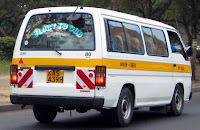
 but only when the driver decides
 he has a full loa
d. And in our case, a full load meant 24 people. On our journey north, up the great rift valley, I learned we would be crossing the equator... well I was 
not about to let this momentous occasion pass me by, so 
I kindly asked our matatu driver if he would stop and let me take a picture at the

equator. He did, I did, and I was promptly accosted by a host of souvenir sa
les folk who wanted to sell me a little something to remember my equatorial crossing. What can I say, I was a
 captive westerner with more shillings than sense, they've seen my type
 before. SO... there I stood with one foot in each hemisphere, contributing to the local economy!

Just another 15 minutes down th
e road, Kimeli asked the driver to stop, and we got out, and as I looked around I saw a small gravel road heading off to the west. Next to the road was a small wooden stand where local folks would sometimes sell honey. On the other side of
 the gravel road was a small enclosure with a crumpled piece
 of tin for a roof. As it turns out that shed was just large enough to serve as the local pool hall. In the center was one functional pool table, and along the side was another older pool table that had seen its better days. I was introduced to the players and learned, that like most folks in this area, they were related in som
e way to my host, Kimeli. 

After visiting briefly with the local billiard pros, I couldn't help but wonder where our next stop would be. Two of the guys we met at the intersection were Ki
meli's younger brothers, one who is still in high school, and the other who is studying engineering at anoth
er university in Nairobi. After Kimeli consulted with his brothers, he said, "We're going for a walk, I want to show you around." Well that sounded great, but in the back of my mind, I couldn't help but wonder, where in the world we were going? We crossed the highway and began to walk down a path... straight into the brush, and that's when things really started to get interesting.

At our first stop Kimeli showed me a water retention pond where people and animals came daily for water. It was not very clean, and he shared about how he hopes after college he can return to this area and help improve the water sour
ces and living conditions for his people. We hiked on another half mile or so and we came to a small compound. It was a small fenced-in area complete with goats, a mule and two metal sheds and two mud huts with thatched roofs. "This is where I grew up" Kimeli said, as he invited 
me into one of the sheds. He showed me the kitchen, and he described 
how he used to stay close to his mother's side as she would prepare "ugali" over the fire. "Ugali" is a mashed potato sort of texture, but its made by mixing corn flour in boiling water. He explained how each structure was for different family members, his younger brother still sleeps in one of the huts when he is home.


On our half mile trek to the next home we stopped to meet a neighbor and her extended family. Once we arrived at his aunt's, we negotiated a small ga
te and we were greeted by more family members.  Meeting his aunt was another treat. His family members were all very gracious and so excited about having a guest drop by for a visit. Kimeli explained and helped me realize that I was the first 
westerner to ever come to his family's land and take the time to stop by and visit for a little while. 

The picture at the right, shows me, Kimeli, his grandmother and a young cousin. She only spoke Swahili, and so Kimeli translated as we got acquainted and visited about how long she had lived in the area. She said nice things about Kimeli and his brothers. Kimeli told me that I was the first white man she had ever met.
 I told her what an honor it was to get to visit her home and to meet her and I g
ave her a small gift. She was so touched and thankful that she grabbed my 
hands and shook them vigorously, then she did something I was not expecting... she spit on my hands, and continued to thank me and shake my hands. Kimeli must have seen the surprise in my face after she spit on my hands, he leaned toward me and whispered how his grandmother had just bestowed a tremendous blessing on me, and was showing her deep appreciation for my small gift. It is said that when an elder blesses you in this way, they
 are blessing you the hope peace and prosperity. After a couple of pictures, it was time to make our way to 
one more home.

As we walked toward Kimeli's second mom's home it was beginning to get dark. I learned that in Kenya, men may sometimes take a second wife later in life. This
 was the case with his father. They often do not divorce, but they just mo
ve on to live with another woman. The father often continues to support the first wife. Unfortunately, I did not get to meet Kimeli's father, he works for the highway department and was out on a job in a remote area. I did get to talk to him on Kimeli's phone and he also 
thanked me for coming to visit. 

As we approached their compound we were greeted by Winnie, a cousin, who I learned, is a first year college student at nearby Eldoret. We were invited inside for a cup of tea. As I mentioned it was pretty dark by now so they lit a small kerosene lantern and set it on a small coffee table. We en
joyed a cup of tea and what they called ground nuts, I learned later they were peanuts. Again, I was reminded
what a novelty I was as a guest. As we visited and
 enjoyed our tea, Winnie sat next to me and constantly brushed my hair with her hands. She was very curious, and g
entle as she stroked my head. It was truly a blessing and I felt that this was a great opportunity to experience real immersion as Kimeli's family members shared their time with us. 

We finished our tea and said our goodbye's and by the light of the full moon we started our one mile hike back out toward the highway. When we reached the highway we met Kimeli's mother. She met us and we took another series of pictures, and visited briefly. Again I wondered, what are we going to do now? Kimeli's home, where we were spending the night was another 1
0 miles down the highway, and I was pretty sure there were not going to be any Matatus coming by this remote stretch of road any time soon. Kimeli ssured me, "Don't worry, we will get a ride." And sure enough, a car came by and pulled over and offered us a ride to Marigot.  I got to meet Kimeli's wife and two daughters. And we had a great evening sharing stories and more tea.

The next day before we started our journey back Kimeli took me to Lake Bogoria
a beautiful park where we saw hot springs, giesers, flamingos and an ostrich or two. More about that in my next entry.

Deo Fisus Labora -  Jeff